
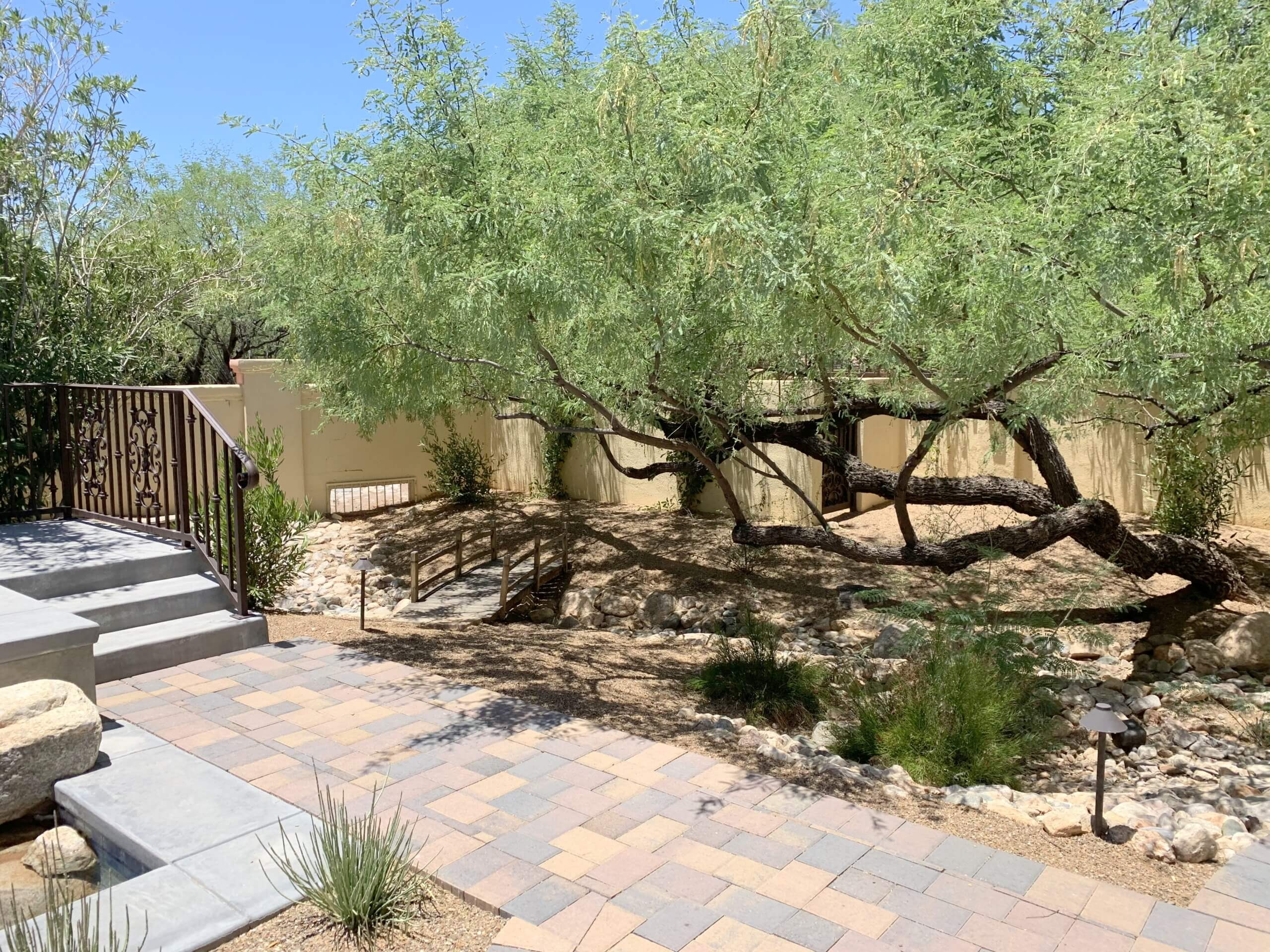
Which Shade Tree Fits Your Tucson Yard? Pros and Cons of 9 Picks
The short answer: There is no single best shade tree for Tucson. The right tree is the one whose mature size, water needs and litter fit the spot you have in mind. For big, dense shade on an open lot, look at Chinese elm, Arizona ash or velvet mesquite. For light, low-water shade over a patio, Desert Museum palo verde or desert ironwood is a better fit. Near a pool or in a narrow side yard, a smaller, tidier tree such as mulga, willow acacia or desert willow causes fewer headaches.
Fall is the time to decide. Tucson's soil stays warm into late autumn while the air cools, so trees planted now can grow roots for months before next summer's heat. Below, nine popular trees are compared on the same points, followed by a quick way to choose and a first-year watering plan.
Tucson shade trees side by side
All sizes, water needs and maintenance notes below come from the trees in our plant guide, which lists how each species performs in Tucson. Sizes are typical mature height by spread; your tree may end up smaller or larger depending on water and soil.
| Tree | Mature size (H × W) | Growth | Water once established | Thorns | Litter | Best fit |
|---|---|---|---|---|---|---|
| Chinese elm | 30–40 ft × 30–40 ft | Fast | Deep watering in hot, dry weather | No | Winter leaf drop | Large yards, dense shade |
| Arizona ash | 30–45 ft × 25–45+ ft | Fast | Occasional deep watering | No | Spring flowers, seeds, fall leaves | Large yards, fall color |
| Willow acacia | About 40 ft × 20 ft | Fast | Very low | No | Light | Narrow spaces, screening |
| Desert Museum palo verde | 20–25 ft × 20–25 ft | Fast | Low; regular while young | No | Some | Patios, filtered shade |
| Velvet mesquite | About 25 ft × 35+ ft | Fast | Little or none | Yes, up to 3 in | Seedpods in summer | Big open lots, native look |
| Texas ebony | Up to 30 ft × 30 ft | Slow | Very low | Yes, sharp spines | Seedpods | Low-traffic accent, dense canopy |
| Desert ironwood | About 25 ft × 25 ft | Slow | Low; overwatering can kill it | On young trees | Very little | Patios, native low-water yards |
| Mulga | 15–20 ft × 10–12 ft | Slow to moderate | Low to regular | No | Little leaf litter; seedpods | Pools, water features, windbreaks |
| Desert willow | About 20 ft × 20 ft | Moderate | Low | No | Seedpods; bare up to 6 months | Small yards, summer flowers |
Pros and cons of each tree
Chinese elm
Pros: Chinese elm is one of the fastest ways to get real shade. It forms a broad, graceful canopy 30 to 40 feet wide, has attractive mottled bark, and is hardy to about 20°F.
Cons: It is semi-deciduous in Tucson and drops its leaves around late December, so plan on a winter raking. It needs deep irrigation during hot, dry weather, and suckers can sprout elsewhere in the yard. Give it room: a 40-foot canopy crowds a small backyard fast.
Arizona ash
Pros: Arizona ash gives dense shade and brilliant yellow fall color, and it handles cold to about 10°F. The 'Fantex' variety, with dark, leathery leaves, is the best choice for home landscapes.
Cons: It gets big (up to 45 feet tall and wide) and messy: male trees shed spring flowers and female trees drop winged seeds. It often needs iron chelate to prevent yellowing leaves (iron chlorosis) and is susceptible to Texas root rot. Careful pruning when it is young helps it grow a strong trunk and branches.
Willow acacia
Pros: Willow acacia grows fast and tall (about 40 feet) but only about 20 feet wide, so it fits spaces other shade trees can't. It needs very little water once established: roughly every three to four weeks in summer and every other month in winter. Fragrant puffball flowers appear mostly in spring.
Cons: Frequent, shallow watering or poorly draining soil turns its leaves yellow. The weeping canopy catches wind, so it needs regular thinning, and young trees benefit from staking.
Desert Museum palo verde
Pros: This thornless hybrid, developed at the Arizona-Sonora Desert Museum in Tucson, grows quickly to 20 to 25 feet and puts on masses of large yellow flowers in spring. The Desert Museum palo verde casts light, filtered shade that suits patios and porches, and it attracts birds and butterflies.
Cons: The shade is light, not dense. It drops some litter, and too much water makes it grow too fast and become top-heavy, with roots that can't support it. Protect the young bark from javelina, rabbits and deer.
Velvet mesquite
Pros: Velvet mesquite is native to Southern Arizona and, once established, needs little or no extra water. Its wide crown (35 feet or more) shades a large area, and it tolerates almost any soil, from rocky native ground to lawn.
Cons: Stout thorns up to 3 inches long, and 3- to 9-inch seedpods that drop in summer and may need cleanup where people walk. Its wide, asymmetrical shape doesn't suit small spaces, young trees often need staking, and pruning in spring triggers rampant growth, so prune in late summer instead.
Texas ebony
Pros: Texas ebony is remarkably drought tolerant, grows a dense canopy, and has fragrant cream flowers from late spring to fall. Its twisting branches make it a striking accent tree.
Cons: It grows slowly and has very sharp spines, so keep it away from walkways and play areas. Falling seedpods can be a nuisance in high-traffic spots, and the canopy grows down to the ground unless you prune to raise it.
Desert ironwood
Pros: A Sonoran Desert native, desert ironwood produces very little litter, needs little water, and stays evergreen with some supplemental irrigation. Pink to white spring flowers and a wide crown make it a good choice for shading a patio or seating area.
Cons: It is slow-growing, young branches have thorns, and young trees need frost protection. Overwatering can kill it, so don't plant it next to thirsty plants on the same irrigation line.
Mulga
Pros: Mulga is an evergreen with silvery, needle-like foliage that doesn't produce messy leaves, which makes it one of the better choices near pools and water features. It also works well as a screen or windbreak and blooms several times a year.
Cons: At 15 to 20 feet tall and 10 to 12 feet wide, it gives modest shade, not a big canopy. It grows slowly unless given regular water, drops pods after flowering, and may need iron chelate in spring.
Desert willow
Pros: Desert willow stays about 20 feet tall and wide, handles cold to about 10°F and low water, and has trumpet-shaped flowers from white to purple all summer. Our plant guide notes that it isn't susceptible to pests or diseases.
Cons: It is deciduous and can be bare for up to six months, so it won't shade a window in winter. It shades lightly and drops seedpods, which you can remove at any time.
How to choose for your yard
Start with the space, not the tree. Walk the spot and measure how far you have to the house, walls, driveway and overhead lines, then compare that with each tree's mature spread in the table.
- Small yard or courtyard: Desert willow, mulga or Desert Museum palo verde. Chinese elm, Arizona ash and velvet mesquite will outgrow the space.
- Next to a pool or water feature: Mulga or desert ironwood, which drop very little litter. Avoid trees that shed seeds, pods or flowers into the water.
- Big, dense shade on an open lot: Chinese elm or Arizona ash if you can water deeply in summer; velvet mesquite if you want a native tree that needs little water.
- Lowest water use: Velvet mesquite, Texas ebony, willow acacia and desert ironwood are the thriftiest once established.
- Kids, pets or busy walkways: Skip velvet mesquite and Texas ebony, which have thorns and spines, and choose a thornless tree instead.
- West-facing windows and patios: A fast grower such as Desert Museum palo verde or Chinese elm will start shading the hottest side of the house sooner.
Wind matters too. Dense canopies catch more wind, which is why willow acacia needs regular thinning, and a tree pushed with too much water, such as an overwatered palo verde, can grow top-heavy before its roots can hold it. Structural pruning while a tree is young prevents many of those problems. See our tips on storm-proofing your trees before monsoon season, or have our certified arborists handle it through our tree services in Tucson.
Planting this fall and watering the first year
The University of Arizona Campus Arboretum's tree planting guide recommends a few simple steps:
- Pick the spot: Plant at least 5 to 10 feet from buildings, and more for trees with wide canopies. Call 811 before you dig so buried utility lines can be marked.
- Dig wide, not deep: Make the hole at least twice as wide as the root ball, but no deeper than the root ball is tall.
- Mulch: Spread 2 to 4 inches of mulch over the root area, keeping it away from the trunk to prevent bark rot.
- Water often at first: In the first year, a new tree may need water as often as every 5 to 7 days.
- Stretch out the schedule: As the tree establishes, water less often but more deeply. Our plant guide lists the long-term schedule for each species.
How you water matters as much as how often. University of Arizona Cooperative Extension's Watering Trees and Shrubs guide says tree roots spread 1½ to 4 times as wide as the canopy and absorb the most water at the dripline and beyond, not next to the trunk. Water should soak 18 to 36 inches deep each time. As the tree grows, move drip emitters outward so they follow the edge of the canopy.
If you'd rather not dig through caliche yourself, our team handles landscape installation from tree selection and placement to planting and irrigation.
Frequently asked questions
What is the fastest-growing shade tree for Tucson?
Chinese elm, Arizona ash, willow acacia, Desert Museum palo verde and velvet mesquite are all fast growers. Chinese elm and Arizona ash give the densest shade but need deep summer watering; palo verde and mesquite shade more lightly on less water.
Which shade trees are best near a pool in Tucson?
Mulga is one of the best choices because it doesn't produce messy leaves. Desert ironwood is another low-litter option. Trees that drop pods, seeds or flowers, such as mesquite, ash and Texas ebony, are better planted well away from the water.
When is the best time to plant a tree in Tucson?
Fall. Warm soil and cooler air let roots grow for months before summer heat arrives, and new trees lose less water to evaporation, so October is an ideal month to plant.
Do native trees need to be watered?
Yes, at first. Even velvet mesquite, which needs little or no water once established, should be watered every 7 to 10 days during its first year. After that, deep, infrequent watering produces stronger roots than frequent shallow watering.
Get help choosing and planting the right tree
Horticulture Unlimited has designed, installed and maintained Tucson landscapes for decades, and our certified arborists can recommend trees that fit your space, water budget and style. Request a quote or call (520) 321-4678 to plan a fall planting.