
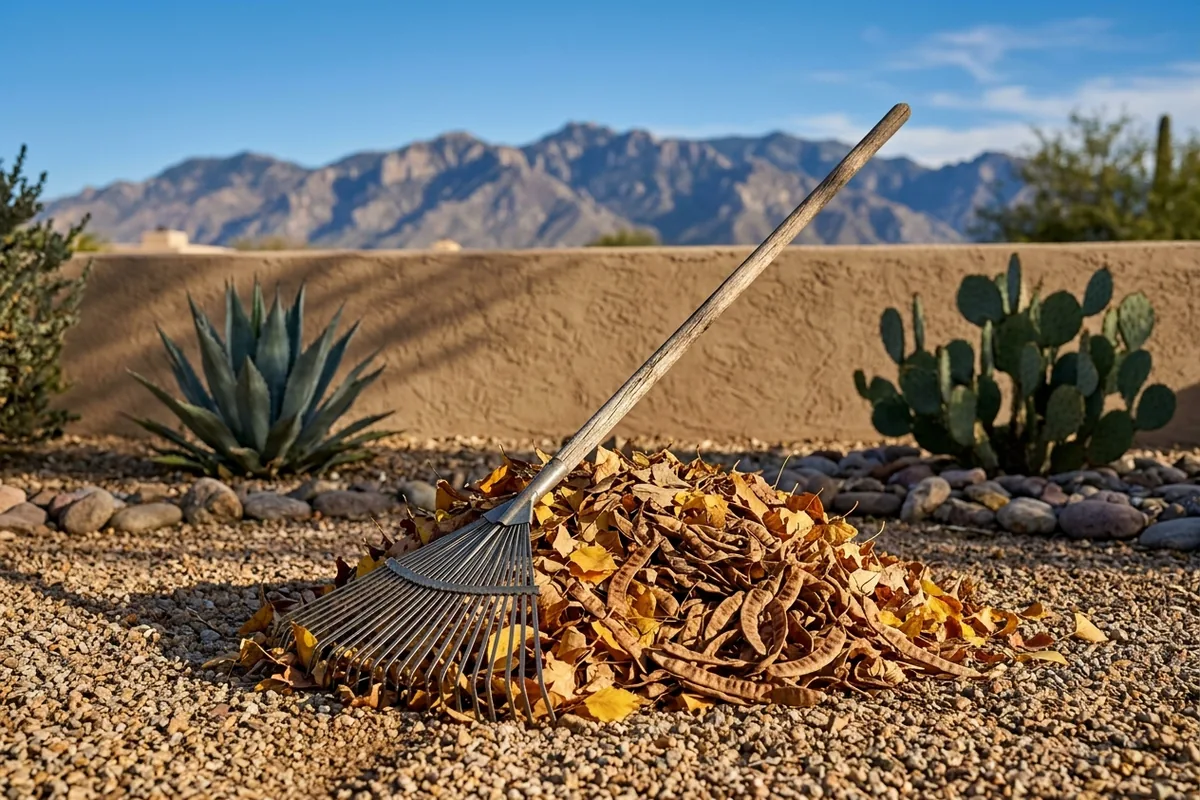
Fall Yard Cleanup in Tucson: What to Clear Now and What to Leave for Spring
The short answer: A fall yard cleanup in Tucson is best done in November and December, once summer growth has stopped and the leaves and pods have started to drop. Clear fallen leaves and pods, spent summer annuals, young winter weeds and debris on paths and gravel, check your irrigation, and get ready for frost. Leave major pruning and any cutting back of frost-damaged plants until after the danger of frost has passed. In Tucson the average last frost date is March 15.
Fall cleanup in the low desert is different from the checklists written for snowy climates. There is no snow to rake ahead of and no irrigation to drain for a hard winter. The goal is a tidy, healthy yard through the holidays that is ready for spring growth. Here is what to do now, what to leave for later, and how to get rid of the debris.
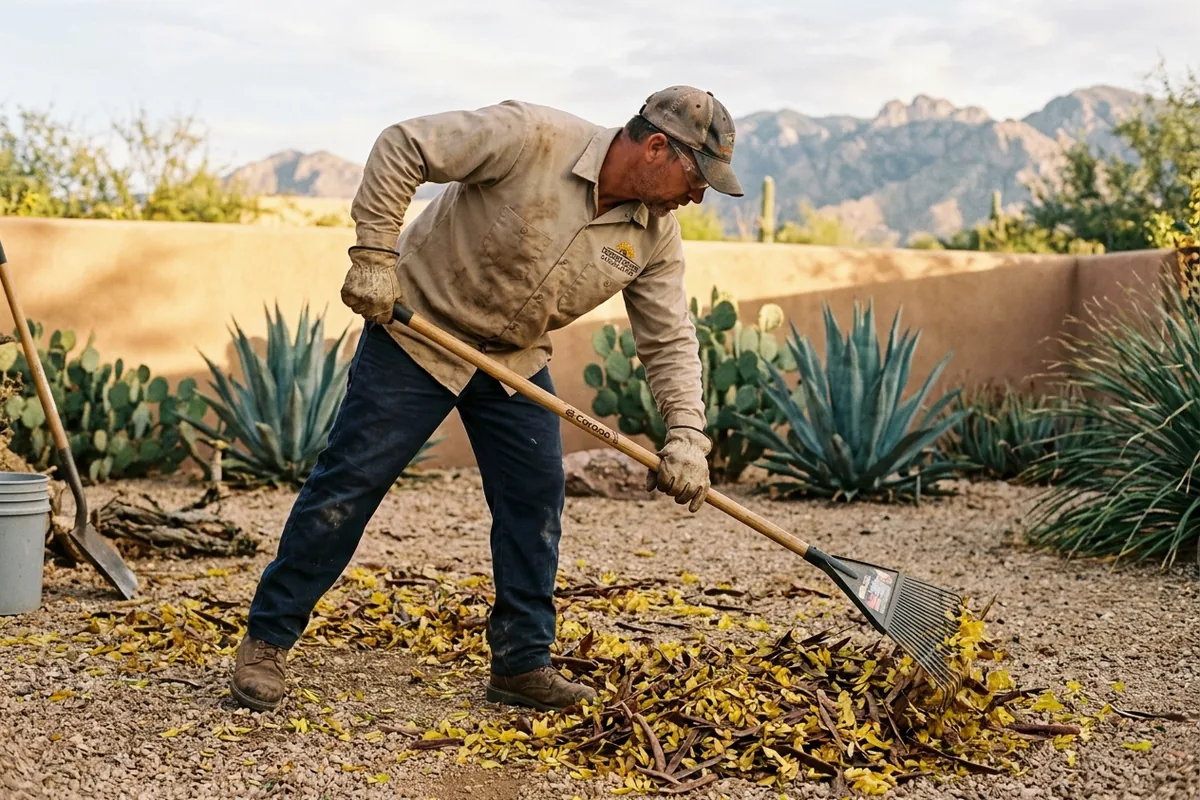
Why fall cleanup is different in a Tucson yard
Three things set a Tucson fall cleanup apart:
- Leaves and pods fall late. Deciduous trees such as Arizona ash and Chinese pistache drop their leaves from late fall into winter, and mesquites shed pods. The heaviest cleanup often lands in November and December, not October.
- Frost is still ahead. According to the University of Arizona Cooperative Extension's December gardening guide for Pima County, freezes can still occur for up to three more months after December begins. Cutting back plants too early can leave them more exposed to that cold.
- Winter weeds start with the cool-season rains. Weeds that sprout now are small and easy to pull. Left alone, they flower and seed before spring.
Your Tucson fall yard cleanup checklist
Work through these jobs from November into December. Most of them take a weekend on a small yard and longer on large or sloped lots.
| Job | When | Why it matters |
|---|---|---|
| Rake or blow leaves and mesquite pods off gravel, patios and lawns | November–January, as they fall | Keeps rock areas clean and stops leaves from smothering a winter lawn |
| Pull spent summer annuals and dead plants from beds | November | Opens space for cool-season flowers and removes places for pests to hide |
| Pull young winter weeds and add mulch to bare beds | After each cool-season rain | Small weeds pull out easily; mulch slows the next round |
| Clear debris from walkways, drainage paths and around the house | November–December | Dead brush can attract pests and become a fire hazard |
| Trim back overgrowth blocking paths, views or walls (light trimming only) | November | Keeps the yard safe and usable without heavy cuts before frost |
| Check irrigation and water less often | November–December | Plants need less water in cool weather |
| Get frost protection ready | Before the first cold night | Frost cloth and a plan for potted plants save tender plants |
| Pile and set out brush for collection | On your Brush & Bulky week | Gets the debris off the property |
Leaves and pods
Rake or blow leaves off decomposed granite and rock areas before they break down and stain or fill in the gravel. Fallen mesquite pods are worth clearing from patios, walkways and play areas. If you overseeded your lawn with winter ryegrass, keep leaves off it so the young grass gets light. Healthy leaves can go into a compost pile or be shredded and spread lightly in planting beds instead of being thrown away.
Spent annuals and dead plants
Pull summer annuals that are finished and remove plants that have died. This is a good time to note gaps you want to fill with cool-season color or to plan a larger change for spring.
Winter weeds and mulch
Pull young weeds after each cool-season rain, while the roots are short. The University of Arizona Cooperative Extension suggests suppressing winter weeds with thick layers of mulch, such as wood chips or straw, in planting areas. For persistent weeds in large gravel areas, professional weed control can save a lot of repeat work.
Paths, drainage and debris
Clear branches, dried brush and windblown debris from walkways, drainage paths and the areas next to your house and walls. Dead brush left in the yard can attract pests and wildlife and can become a fire hazard.
Light trimming, not heavy pruning
It is fine to trim back stems that block a walkway, a gate or a view. Save structural pruning of trees and hard cutbacks of shrubs for the right season. Major pruning in fall pushes new growth that is easily damaged by frost.
Irrigation
Cooler days mean plants use less water. The University of Arizona Cooperative Extension recommends adjusting how often you water (the frequency, not the run time) for December, and turning the system off when rains are ample. Walk your drip lines and sprinklers while you clean up: look for broken emitters, leaks and heads blocked by leaves or gravel, and adjust the controller.
Frost prep
Have frost cloth on hand, know which potted plants you will move into a garage or under a patio, and identify your tender plants before the first cold forecast. Our guide on how to protect frost-tender plants covers covering plants and treating frost damage.
What to leave until spring
Some cleanup jobs do more harm than good if you do them in fall:
- Cutting back frost-damaged plants. The University of Arizona Cooperative Extension's January gardening guide for Pima County says not to prune frost-damaged plants yet, because even frozen branches protect the plant somewhat. Wait until mid-March, when plants leaf out and you can see what is alive. Tucson's average last frost is March 15, and it can be later at higher elevations or in cold valleys.
- Major pruning and hard shrub cutbacks. Heavy cuts encourage tender new growth right before the coldest weeks.
- Fertilizing landscape plants. The December guide advises against it, beyond a mild feeding of winter vegetables, because new growth is sensitive to frost.
Once the frost danger has passed, a second round of late-winter cleanup and prep in January and early spring gets the yard ready for new growth.
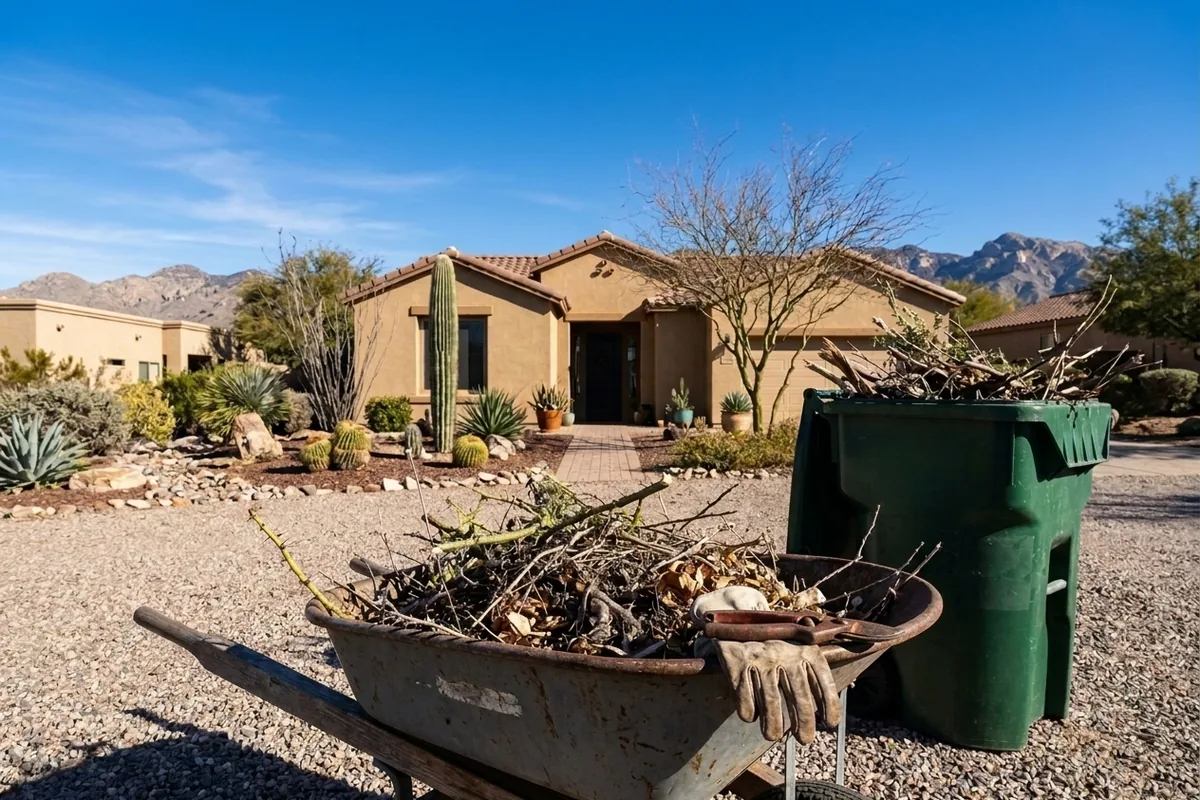
How to get rid of yard waste in Tucson
If you live inside Tucson city limits, the City of Tucson Brush & Bulky collection picks up yard debris twice a year in each residential service area. The main rules, as listed by the city:
- Set materials out by 6 a.m. on the Monday of your collection week, and no more than two weeks ahead.
- Keep the pile at least 3 feet from obstacles such as trash and recycling containers and utility meters.
- The limit is 10 cubic yards per household; anything over the limit is not taken.
- Brush can be up to 5 feet long and 24 inches in diameter. Cacti must be boxed, with a 25-pound limit.
- Dirt, stone, rocks and gravel are not accepted.
Check your collection dates on the city's Brush & Bulky schedule or by address before you start, so a pile of branches doesn't sit in front of the house for weeks. Outside city limits, such as in unincorporated Pima County, check with your trash hauler or HOA for green waste options.
Do it yourself or hire a crew?
A small yard with a few beds is a reasonable weekend project. A professional crew makes more sense when:
- The property is large, sloped or has many desert trees dropping pods and leaves.
- You need the yard ready for holiday guests or an HOA standard by a set date.
- You spend part of the year away and want the work done while you are gone.
- It is a commercial property or HOA common area that has to look consistent all season.
Horticulture Unlimited provides residential and commercial landscape maintenance services in Tucson, including weeding, pruning, tree trimming, plant care and general landscape clean-up. Our maintenance plans cover trimming, bed cleanups and seasonal work, and our certified arborists handle tree work. We serve Tucson and nearby communities such as the Catalina Foothills.
Frequently asked questions
When should I do a fall yard cleanup in Tucson?
November and December are the main months, because that is when most leaves and pods drop and winter weeds appear. Plan a second, lighter cleanup after the last frost, around mid-March.
Should I cut back my plants in the fall?
Only lightly, to clear paths or remove dead material. Leave major pruning and cutting back of frost-damaged plants until after the danger of frost has passed, around mid-March in Tucson.
Can I leave fallen leaves on the ground?
Clear them from gravel, patios and winter lawns. In planting beds, a thin layer of shredded healthy leaves can work as mulch, kept away from plant stems and trunks.
Does the City of Tucson pick up yard waste?
Yes. City of Tucson residents get Brush & Bulky collection twice a year, with a 10 cubic yard limit per household and size limits for brush. Check the city's schedule for your dates.
Do I need to winterize my irrigation in Tucson?
Hard freezes are less common than in colder climates, so most yards don't need a full winterizing. Water less often in the cool season, check for leaks and broken emitters, and protect exposed backflow devices and pipes on freezing nights.
Fall & winter yard cleanup
Get your yard ready for the holidays
Spend the cool months enjoying your yard, not cleaning it. Our crews handle fall yard cleanup and ongoing landscape maintenance across Tucson.
- Free quotes
- Tucson landscapers since 1979
- Residential & commercial