
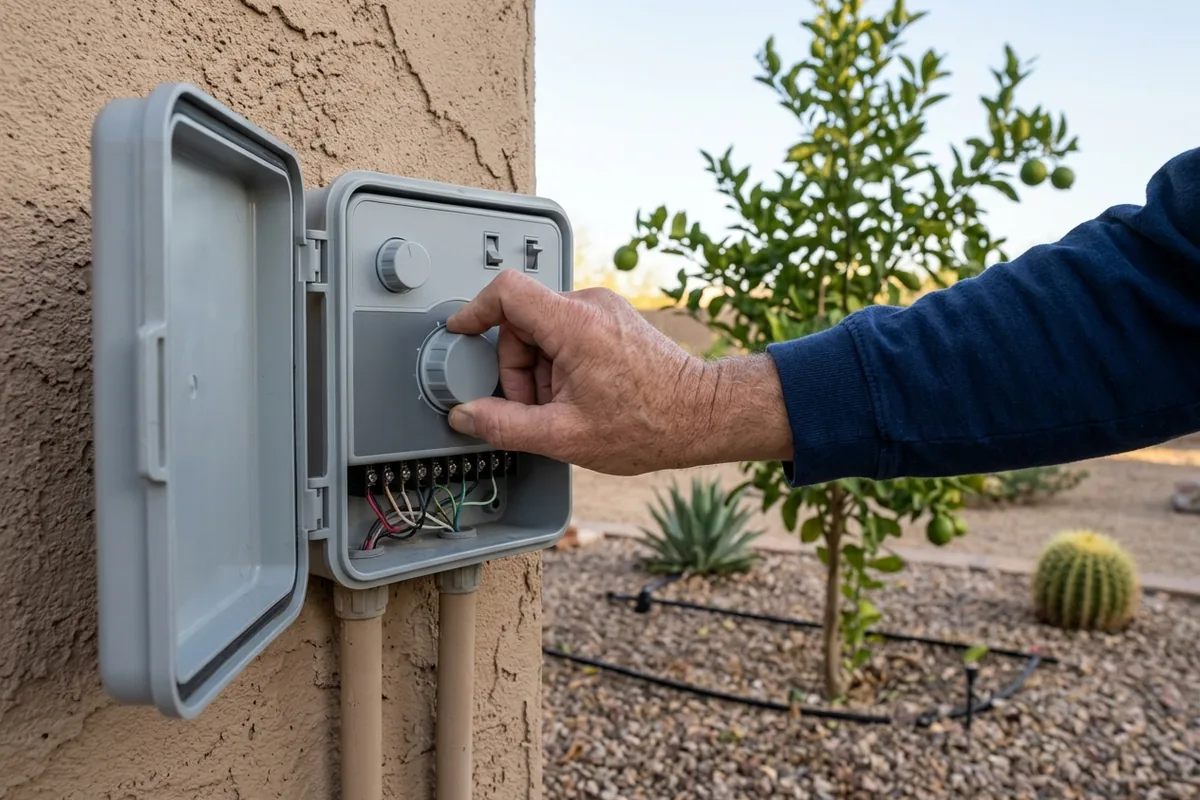
Winter Watering Schedule for Tucson: How Often to Water Each Plant
The short answer: From December through February, most established Tucson landscapes need far less water than in summer. In-ground cacti, agaves and yuccas and established desert trees and shrubs need no regular irrigation. Desert ground covers, non-desert trees and shrubs, citrus and palms need water about every 14 to 21 days. Winter lawns need water every 5 to 7 days. Keep each watering just as long as in summer, and only water less often.
Plants use 3 to 5 times as much water in the hot, dry months as they do in winter, according to the University of Arizona Cooperative Extension's guide to watering trees and shrubs. A controller still running its summer program in December wastes water and can rot roots, especially on cacti and succulents. If you have already worked through our fall yard cleanup checklist, this is the next job: switching your irrigation to the winter schedule.
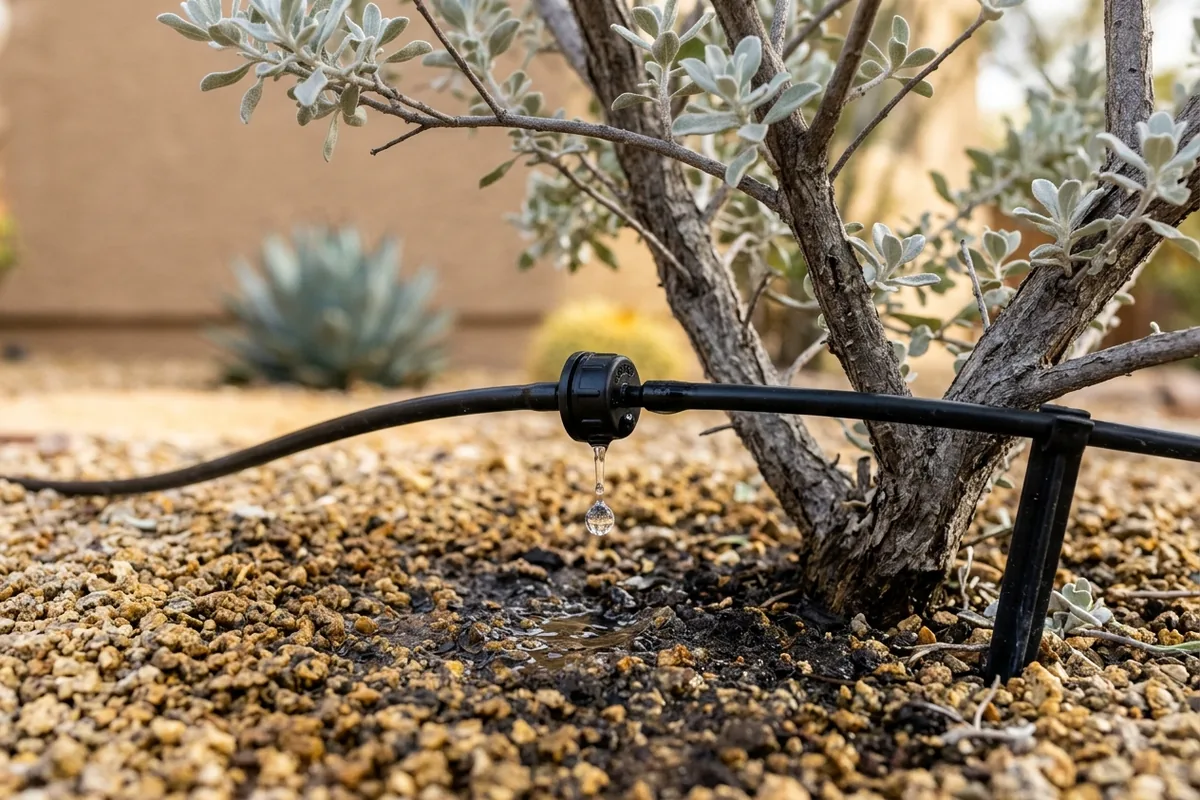
Tucson winter watering schedule by plant type
The table below shows the winter row (December to February) of the University of Arizona Cooperative Extension's recommended watering schedule for Southern Arizona. It applies to established plants. Plants put in the ground within the last year or two still need more frequent water while their roots spread.
| Plant type | Winter (Dec–Feb): water every | Water should soak down to |
|---|---|---|
| Cacti, agaves and yuccas (in the ground) | No irrigation | 12–18 inches |
| Desert trees and shrubs (palo verde, mesquite, ironwood, Texas sage) | No irrigation | 24–36 inches |
| Desert ground covers and perennials | 14–21 days | 12–18 inches |
| Non-desert trees and shrubs | 14–21 days | 24–36 inches |
| Non-desert ground covers and vines | 10–14 days | 12–18 inches |
| Palms | 14–21 days | 36 inches |
| Citrus trees | 14–21 days | 36 inches |
| Roses and perennial flowers | 7–14 days | 18–24 inches |
| Seasonal flowers and vegetables | 3–7 days | 12–18 inches |
| Lawns (bermuda, transitional or perennial ryegrass) | 5–7 days | 6–8 inches |
| Patio container plants | 5–7 days | To the bottom of the pot |
| Potted cacti and succulents | 10–14 days | To the bottom of the pot |
A few notes on reading it:
- "No irrigation" does not mean "never." The same Extension office says that if there has been no rain for four to six weeks, established trees and shrubs should get a deep watering. A dry winter in Tucson is common, so keep an eye on the calendar.
- Use the longer end of each range in December and January, when days are shortest and coolest, and the shorter end during warm, windy or dry stretches.
- Winter lawns are usually bermuda that has been overseeded with ryegrass. Once the rye is established, it fits the 5 to 7 day range above.
Change how often, not how long
This is the rule most people get backwards. The University of Arizona's December gardening guide for Pima County says to adjust irrigation frequency, not duration, in winter.
The run time is set by how deep a plant's roots go, not by the season. A tree's roots sit 18 to 36 inches down in summer and in winter. If a 2-hour drip cycle wets the soil to that depth in July, it takes about 2 hours in January too. Cutting the minutes instead of the days leaves you with shallow, frequent watering that never reaches the deeper roots and keeps the surface damp, which is what cacti and many desert plants dislike most in cold weather.
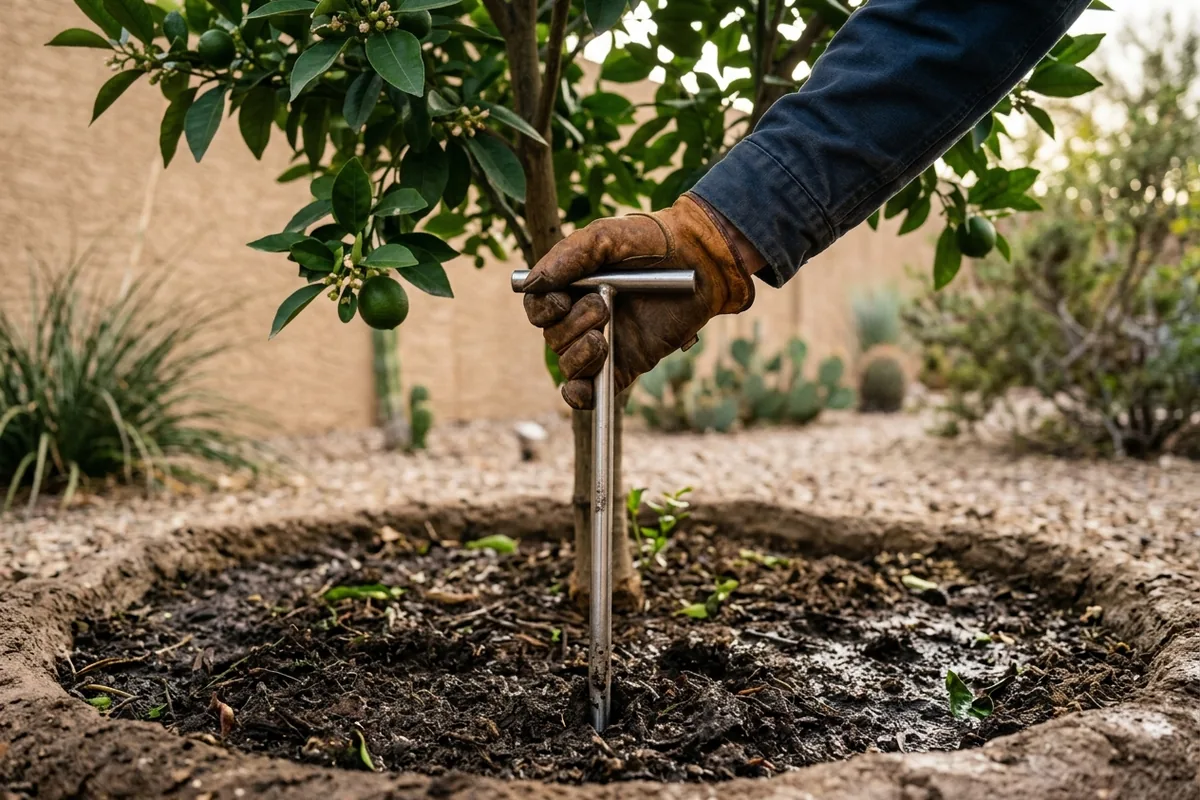
To check your run time, push a long screwdriver or a smooth metal rod into the soil an hour or so after watering. It slides easily through wet soil and stops when it hits dry soil. If it stops well short of the depths in the table, the run is too short. Extension's rule of thumb for when to water again: when the probe won't go in more than 3 to 4 inches.
How to set your irrigation controller for winter
Most Tucson yards run on an automatic controller with several valves (zones). Here is how to move it to a winter schedule:
- List what each valve waters. Walk the yard while each zone runs. Note whether it feeds trees, shrubs, cacti, flower beds, pots or lawn.
- Leave the run times alone. Write them down so you can confirm nothing changed.
- Change the days between waterings for each valve to match the table. On many controllers this is an "interval" or "every X days" setting rather than days of the week.
- Turn off valves that only water cacti or established desert trees and shrubs, and set a reminder to give them a deep watering if four to six weeks pass without rain.
- Check for leaks and clogged or broken emitters while you are out there. Cool weather is the easiest time to find them.
- Use the rain or pause setting if your controller has one, and turn on the rain sensor if one is installed.
When one valve waters very different plants. Many older systems put cacti, desert shrubs and thirstier plants on the same line. In that case no schedule is right for everything: either the citrus goes thirsty or the cacti get wet all winter. The fix is to move plants with different water needs onto separate valves, or to cap emitters on plants that should not be watered. Our team handles this kind of irrigation repair and controller upgrades, including retrofitting older systems with new timers, tubing and components.
Example: summer vs. winter settings for a typical Tucson yard
Here is how the change looks on a common four-valve home system. The intervals come from the same University of Arizona schedule; the run times are examples only, because yours depend on your emitters, soil and plant sizes.
| Valve | What it waters | Run time (example) | Summer: every | Winter: every |
|---|---|---|---|---|
| 1 | Established desert trees and shrubs (mesquite, palo verde, Texas sage) | 2 hours | 14–21 days | Off; deep water after 4–6 weeks without rain |
| 2 | Citrus trees | 2 hours | 7–10 days | 14–21 days |
| 3 | Desert ground covers and perennials | 1 hour | 7–10 days | 14–21 days |
| 4 | Overseeded lawn (sprinklers) | 15 minutes | 2–4 days | 5–7 days |
Notice what stays the same: every run time. Only the gap between waterings changes. Potted plants on a separate drip line follow the container rows in the table above: about every 5 to 7 days, or 10 to 14 days for potted cacti and succulents.
If your yard doesn't split this neatly, for example if citrus and cacti share valve 2, that is the mixed-valve problem described above, and it is worth fixing before the cold months.
Rain, freezes and dry spells
- After a good soaking rain, skip the next scheduled watering. UA's December guide suggests turning the system off entirely when winter rains are ample.
- Before a hard freeze, dry plants suffer more cold damage than plants with moist soil. If the soil is dry and a freeze is forecast, a normal watering a day or two before helps. Our guide to protecting desert plants on freezing nights covers frost cloth and potted plants.
- Protect exposed pipes and backflow devices on freezing nights. After a hard freeze, run each zone once and look for new leaks or a damaged backflow device.
- In a dry winter, give established desert trees and shrubs one deep watering if four to six weeks have passed without rain.
Signs you are watering too much or too little
The University of Arizona lists these symptoms for trees and shrubs:
| Too little water | Too much water |
|---|---|
| Soil is dry | Soil stays damp all the time |
| Older leaves turn yellow or brown and may drop | Young leaves turn light green or yellow |
| Leaves wilt or curl | Young shoots wilt even though the soil is wet |
| Leaves are green but brittle | |
| Algae or mushrooms grow on the soil |
Soggy patches, water running down the street or one dry corner while another floods often point to a broken line or emitter rather than the schedule. See our list of signs of a faulty irrigation system for what to look for.
New plants need a different plan
The schedule above is for established plants, which usually means plants in the ground for at least one to two years. Cool weather is a popular time to plant in Tucson, and new plants don't fit the winter table yet. University of Arizona Cooperative Extension notes that newly planted landscape plants, citrus and other fruit trees need daily watering for the first few weeks, then a gradual lengthening of the time between waterings until they are established.
In practice, that means:
- Put new plants on their own valve if you can, so their extra water doesn't reach the established plants around them.
- Stretch the interval step by step over the first months instead of jumping straight to the winter numbers.
- Check the root ball, not only the surrounding soil. A new plant's roots are still in the original root ball, which can dry out even when the soil around it feels damp.
If you are planning a new planting or a full yard update this winter, our landscape installation and irrigation teams can design the new plantings and an irrigation layout that gives each plant group its own valve and schedule.
When to switch back to a spring schedule
The UA schedule treats March and April as spring. Tucson's average last frost is around March 15, according to UA's January gardening guide for Pima County. As nights warm and plants start new growth in March, move each valve to its spring interval. Turn cactus and desert-tree valves back on if you turned them off. Run times still stay the same; only the days between waterings get shorter.
Frequently asked questions
How often should I water my yard in Tucson in winter?
It depends on the plant. Established cacti and desert trees and shrubs need no regular winter watering. Desert ground covers, citrus, palms and non-desert trees and shrubs need water every 14 to 21 days, and winter lawns every 5 to 7 days.
Should I water cactus in the winter in Tucson?
Not cacti planted in the ground. The University of Arizona schedule calls for no winter irrigation for established cacti, agaves and yuccas. Potted cacti and succulents dry out faster and need water about every 10 to 14 days.
Should I shorten my drip run time in winter?
No. Keep the same run time so water still reaches the roots, and water less often instead.
Should I turn off my sprinklers in winter?
Turn off valves that only water established cacti or desert trees and shrubs, and pause the system after soaking rains. Valves for lawns, citrus, palms, flowers and non-desert plants should stay on with longer gaps between waterings.
Can a landscape crew handle the seasonal changes for me?
Yes. Our landscape maintenance service includes irrigation system upkeep for homes and businesses across Tucson, and our irrigation team can repair or update your system. Call (520) 321-4678 or request a free quote.
Irrigation repair & installation
Get your irrigation ready for winter
Our irrigation team checks your drip and sprinkler zones, fixes leaks and broken emitters, and sets your controller for the cool months, so every plant gets the water it needs.
- Free quotes
- Tucson landscapers since 1979
- Residential & commercial